
Search no longer ends at a list of blue links. AI answer engines read a Shopify store as a data source — entities, relationships, reviews and prices — and either cite it or skip it. Ranking in that world still needs the old foundations, but the differentiator is machine readability: deep JSON-LD, entity-rich product content, and Core Web Vitals that survive a real phone. This is now the site’s single Shopify SEO guide, combining the AI-era trends below with the advanced technical and basic practices from our earlier October and August Shopify SEO posts.
Before any of the AI-era work below, the foundations from the earlier Advanced and Practices guides still have to hold. Every product and collection page needs a unique title and meta description written for a human searcher, Product and BreadcrumbList schema that matches what is actually on the page, a clean sitemap with no orphaned or duplicate URLs, and internal links from blog and collection pages to the products they mention. Fix the crawl basics first — a store that AI crawlers cannot read cleanly will not be cited, however good its JSON-LD is — then layer the GEO, schema-graph and programmatic work in the sections below on top of it.
How AI Search Reads Your Store
Search changed underneath us. The old engines crawled pages, indexed text and matched queries against meta tags, headings and keyword density. AI answer engines work differently: they read meaning — entities and their relationships, reviews, prices — through vector retrieval and knowledge graphs. A store that only speaks keywords is invisible to them; a store that speaks structured data gets cited.
Treat your store as a data source first and a storefront second. AI engines check whether your entities connect — product to brand to review to price — cross-verify your reviews, and judge whether your store looks trustworthy. A store with thin, unconnected data does not rank lower; it simply never appears in the AI answer at all.
| Optimization Factor | Traditional Shopify SEO | AI-Era Shopify SEO |
|---|---|---|
| Primary Focus | Exact-match keywords & metadata | Entity relationships & semantic context |
| Data Structuring | Basic schema markup | Deep nested JSON-LD & graph entities |
| Content Architecture | Standard product descriptions | Comprehensive buyer queries & FAQs |
| Crawl Optimization | XML Sitemap indexing | Real-time LLM accessibility & microdata |
| User Experience Metric | Basic load time & mobile usability | Core Web Vitals & Interaction to Next Paint (INP) |
When analyzing these critical Shopify SEO Trends side by side, it becomes clear that technical precision combined with comprehensive, authoritative content serves as the foundation for modern search engine dominance. Technical teams at One Code Stream consistently emphasize that engineering your store for machine readability naturally accelerates performance across all organic channels.
7 Key Shopify SEO Trends Reshaping E-Commerce Rankings
To capture market share in an increasingly intelligent search ecosystem, e-commerce stores must upgrade their technical infrastructure and editorial models. Below are seven actionable strategies reflecting the most influential Shopify SEO Trends currently impacting merchant revenue.
1. Generative Engine Optimization (GEO) and Entity Mapping
Generative Engine Optimization (GEO) focuses on optimizing digital content so that artificial intelligence systems can accurately parse, summarize, and cite your store as a definitive source. Unlike legacy search algorithms that calculate authority primarily through external hyperlinking networks, generative models build vector space representations of your brand, products, and industry domain.
To optimize for GEO, Shopify merchants should integrate clear entity definitions across catalog content. This involves explicitly linking products to their exact categories, materials, standard identifiers (GTIN, MPN, ISBN), and compatible accessories. Ensuring consistent brand messaging across third-party review networks, press mentions, and active social profiles solidifies your brand entity within search knowledge graphs.
2. Advanced Schema Graph Construction with Custom JSON-LD
While native Shopify themes include basic microdata tags, capitalizing on contemporary Shopify SEO Trends requires deploying fully customized, deeply nested JSON-LD schema graphs. Standard out-of-the-box templates often fragment structured data, generating separate disjointed schema blocks for products, organization details, and reviews.
Implementing connected `@graph` schemas ensures that search crawlers immediately understand the explicit relationship between your business organization, individual product variants, dynamic inventory status, and official return policies. Utilizing direct references documented on Google Search Central allows technical teams to build dynamic Liquid schema structures that automatically inject complete product metadata directly into the document header.
<script type="application/ld+json">
{
  "@context": "https://schema.org",
  "@graph": [
    {
      "@type": "Organization",
      "@id": "{{ shop.url }}/#organization",
      "name": "{{ shop.name }}",
      "url": "{{ shop.url }}",
      "logo": "{{ 'logo.png' | asset_url }}"
    },
    {
      "@type": "Product",
      "@id": "{{ product.url }}/#product",
      "mainEntityOfPage": "{{ product.url }}",
      "name": {{ product.title | json }},
      "image": "{{ product.featured_image | image_url: width: 1200 }}",
      "description": {{ product.description | strip_html | json }},
      "sku": {{ product.selected_or_first_available_variant.sku | json }},
      "offers": {
        "@type": "Offer",
        "priceCurrency": "{{ cart.currency.iso_code }}",
        "price": "{{ product.selected_or_first_available_variant.price | money_without_currency }}",
        "availability": "https://schema.org/{% if product.available %}InStock{% else %}OutOfStock{% endif %}",
        "seller": {
          "@id": "{{ shop.url }}/#organization"
        }
      }
    }
  ]
}
</script>
3. Leveraging Technical Shopify SEO Trends for Better Crawlability
Optimizing theme code within Shopify’s underlying Liquid architecture remains a central technical component among leading Shopify SEO Trends. AI search crawlers process vast amounts of web data daily; inefficient codebase setups that waste crawl budget or delay client-side script execution directly harm indexation efficiency.
Merchants should regularly audit Liquid rendering performance to remove unnecessary loop iterations, strip obsolete app snippets, and consolidate render-blocking dynamic elements. Ensuring that core page layouts render cleanly server-side guarantees that search bot user agents receive full HTML content without depending on slow client-side JavaScript execution.
- Eliminate Obsolete Liquid Apps: Manually clear leftover snippet tags injected into `theme.liquid` by uninstalled apps.
- Optimize Image Delivery: Enforce native responsive image techniques using Shopify’s modern `image_tag` helper alongside `srcset` parameters.
- Refactor Complex Loops: Limit heavy nested loops across collection pages by utilizing paginated server-side queries.

4. Optimizing Core Web Vitals and Interaction to Next Paint (INP)
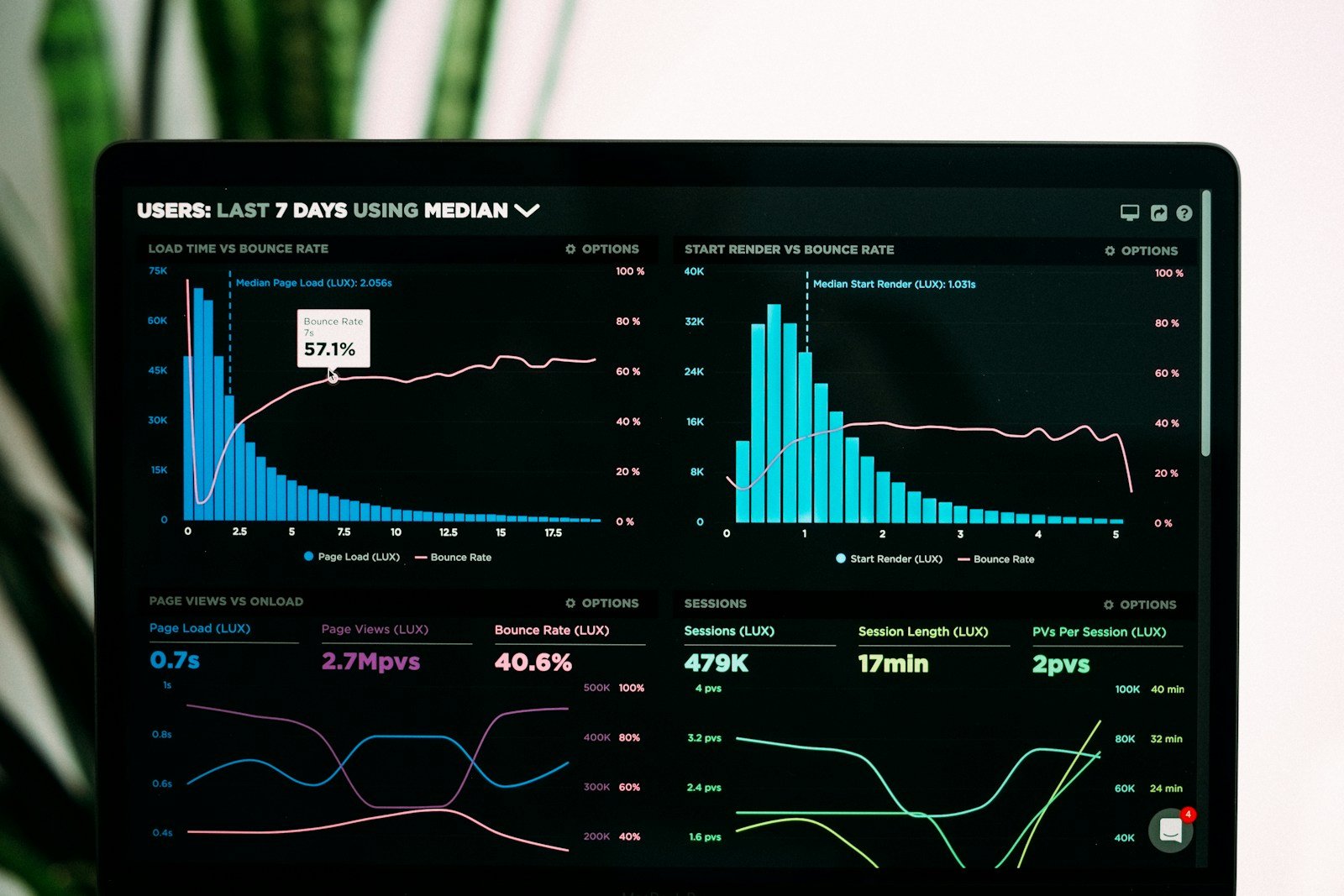
Page experience metrics continue to serve as critical baseline filters for modern search algorithms. The recent transition to Interaction to Next Paint (INP) as a official web vital metric means e-commerce platforms must maintain high visual responsiveness during full user sessions—not just during initial page render.
Shopify stores frequently suffer from high INP latency caused by stacked third-party marketing scripts, heavy live-chat widgets, dynamic app badges, and unoptimized slide-out cart scripts. By offloading non-critical JavaScript to web workers or deferring third-party analytics until primary user interactions occur, developers can preserve lightning-fast UI responsiveness while retaining essential tracking functionalities.
5. Programmatic SEO and Contextual Collection Architecture
Ready to Build, Fix, or Scale Your Website?
One Code Stream engineers high-speed, conversion-focused websites, custom web applications, and e-commerce solutions for global businesses. Let’s turn your vision into measurable digital growth.
Static product taxonomy structures are no longer sufficient to capture broad long-tail user intent. A major trend in modern Shopify SEO Trends is the deployment of programmatic landing pages tailored toward specific intent clusters, use cases, and attribute combinations.
Instead of relying strictly on top-level parent collections, high-performing storefronts utilize automated tags, custom metafields, and dynamic search templates to build landing pages around precise non-branded search terms. For example, instead of merely featuring a generic “Running Shoes” collection, modern programmatic strategies build dedicated, contextually enriched collections targeting explicit attributes like “Breathable Wide-Toe Trail Running Shoes.” Detailed execution guidelines for managing metafields can be found directly within the Shopify Help Center resources.
6. EEAT and Verified First-Party Customer Experience Signals
Search engines place elevated emphasis on Experience, Expertise, Authoritativeness, and Trustworthiness (E-E-A-T), particularly for commercial e-commerce websites handling financial transactions. Machine learning models assess qualitative trust signals across your storefront to confirm operational legitimacy before presenting items in top answer slots.
Integrating verified customer reviews, clear author bios for editorial blog posts, accessible customer service channels, transparent shipping policies, and explicit return details directly into your page architecture builds immediate trust. Furthermore, injecting structured review microdata (`AggregateRating` and `Review` schemas) ensures AI algorithms validate real-world consumer feedback alongside standard product catalog specs.
7. Conversational Content & Multi-Modal Search Optimization
The modern consumer discovery path is shifting rapidly from fragmented short queries toward conversational, multi-sentence prompts and visual visual inputs. Buyers now input queries like “What is the best water-resistant DSLR camera backpack for winter hiking under $150?” into conversational AI tools.
To capture this conversational traffic, Shopify store content must directly answer complex purchase queries within product descriptions, buying guides, and structured FAQ accordions. In addition, multi-modal search engines analyze image metadata and high-resolution product photography. Ensuring high-contrast images, precise descriptive alt tags, and comprehensive visual file names allows search engines to match your catalog against camera-driven visual search prompts.
Implementing Sustainable Shopify SEO Strategies
Successfully capitalizing on contemporary Shopify SEO Trends requires a long-term commitment to combining sound technical web architecture with user-first content engineering. Rather than attempting short-term tactics designed to manipulate temporary search engine quirks, store owners should establish rigorous development workflows that maintain clean codebase standards, structured data integrity, and fast asset delivery.
As web crawlers become more intelligent at interpreting real-time site updates, maintaining consistency across product metadata, dynamic inventory levels, and omnichannel pricing becomes vital. Regularly auditing store microdata errors through Google Search Console, running performance budgets for new application installs, and keeping theme assets optimized ensures your Shopify site remains competitive as search technologies continue to evolve.
Frequently Asked Questions
How does AI search impact standard Shopify SEO?
AI search engines prioritize structured semantic data, entity relationships, and direct answer synthesis over traditional string-matched keywords. To rank, Shopify stores must provide clean JSON-LD microdata, comprehensive product specifications, and high-authority contextual content.
Why is structured data critical for modern Shopify stores?
Structured data (JSON-LD) acts as a direct API for search engine crawlers and Large Language Models (LLMs). It allows AI agents to instantly extract pricing, real-time availability, merchant policies, and variant details without relying on unstable visual parsing.
How can I improve Interaction to Next Paint (INP) on Shopify?
You can optimize INP by minimizing main-thread blocking JavaScript, reducing third-party Shopify apps, deferring non-critical scripts, and optimizing Liquid template loops to execute efficiently prior to DOM rendering.
Does headless Shopify architecture perform better in AI search?
Headless architecture offers superior control over server-side rendering, sub-second page loads, and highly customized API endpoints for structured microdata. While not strictly required, headless setups provide technical advantages for fast, crawlable LLM indexing.
Conclusion
Adapting your storefront to align with dominant Shopify SEO Trends ensures long-term visibility, stable organic user growth, and higher conversion rates. By shifting your optimization strategy toward Generative Engine Optimization, rich schema integration, supercharged theme performance, and deeply context-rich editorial content, your online business can effectively navigate the AI search transformation and secure top-tier search rankings for years to come.